Truth Tested: How New York Times Advertising Uses Human Insight to Prove Creative Impact
The iconic media brand routinely proves creative effectiveness 175 years after its first advertisement.
For 175 years, The New York Times has helped brands tell their stories through advertising campaigns. Now, the iconic media organization is enabling brands to prove their ads drive impact with real audience insights vs. gut instinct.
At the Advertising Research Foundation’s (ARF) Creative Effectiveness event, Tusar Barik, SVP of Marketing at New York Times Advertising (NYTA), and James Slezak, founder and CEO at Swayable, explored the evolution of 175 years of creative—and how pre-testing ads with real people has become vital to guide campaign strategy for NYTA’s brand partners.
1. Creative—and how brands define effectiveness—has evolved in 175 years
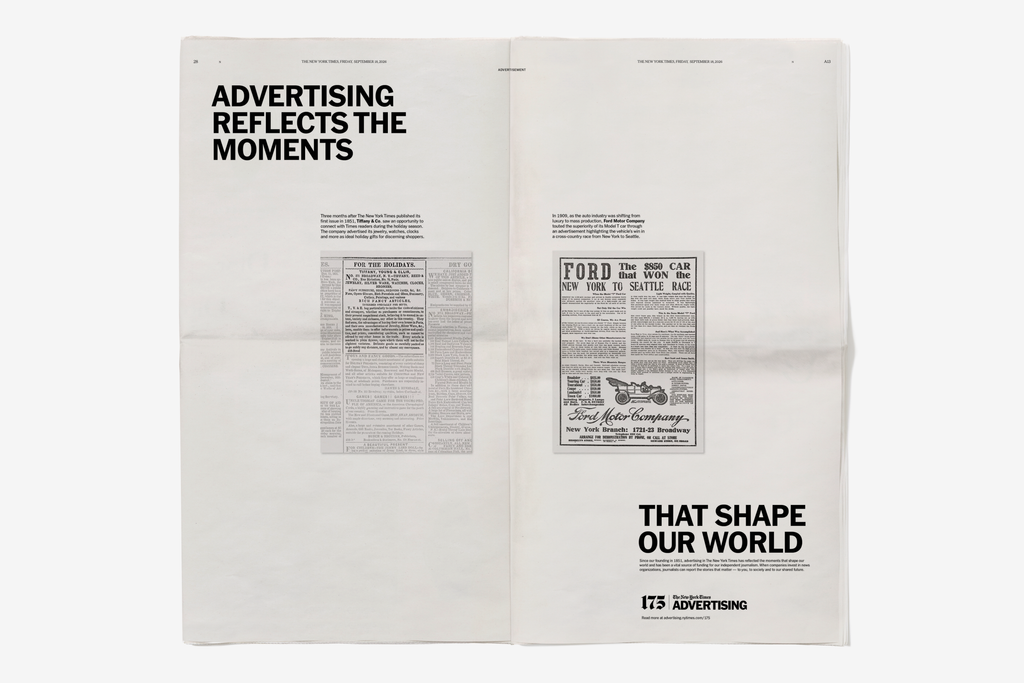
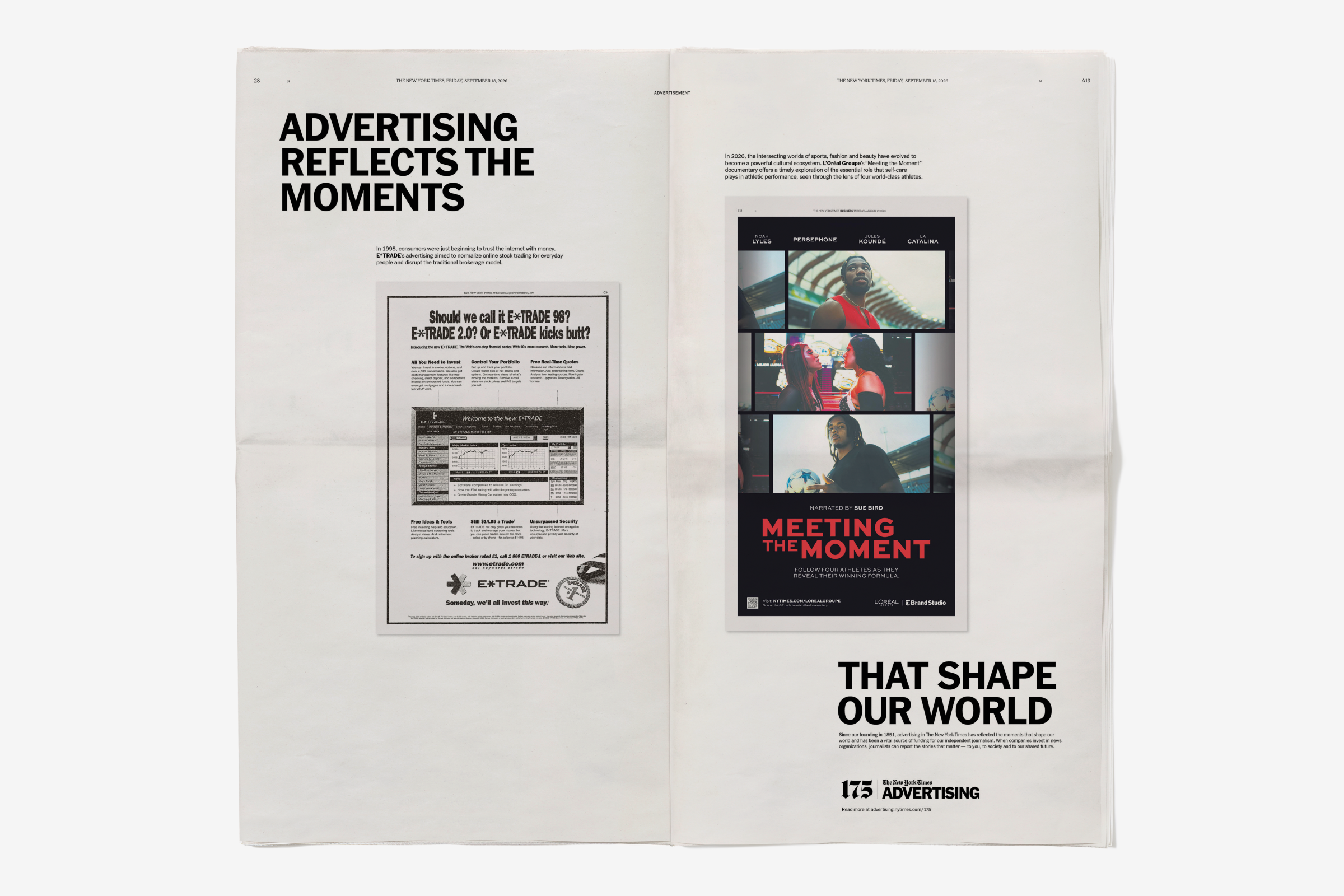
NYTA celebrated the media organization’s 175th anniversary with a campaign calling back to original ads from Tiffany’s and Ford.
The New York Times’ work with Swayable started on the consumer side, where it tested its own creative to learn what built awareness and drove subscriptions, particularly for properties including Games, Cooking, Wirecutter and The Athletic. Seeing the insights from that work, NYTA realized it could offer the same pre-testing to its advertising clients.
“It’s really important to us that we have quality advertising that exists within our ecosystem,” said Tusar. “We want to make sure that we have creative which, frankly, makes an impact.”
NYTA recently marked the media brand’s 175th anniversary with a campaign reflecting on nearly two centuries of advertising: from an 1851 Tiffany’s ad that was a single block of text to new documentary-style partnerships including a series with L’Oréal.
Today, marketers want outcomes across the whole funnel. Beyond the brand building The New York Times is known for, Barik sees NYTA’s power in the mid-funnel, particularly around driving brand consideration. This is where the organization focuses a bulk of its pre-testing and measurement with Swayable.
2. Proving that ad value is table stakes for publishers
Marketers answer to their CFOs and shareholders for every ad dollar, so they need proof that their ads work. This makes proving value a core part of the job for publishers such as The New York Times. Any publisher or media platform that can’t back up campaign impact with evidence isn’t serving its customers in the best way possible.
“Every marketer I speak to is facing increased pressure to think about how effective their ads are,” said Tusar.
Swayable enables organizations including NYTA to prove creative impact by working with marketing and insights teams to integrate testing as a routine program rather than one-off research.
“A big part of our investment in building Swayable’s technology is about creating testing programs that get deployed routinely in standardized ways,” said James.
Iterative testing is vital for organizations like NYTA, as audiences interact with news environments differently than they do with properties such as Games or Cooking. NYTA leverages pre-testing to constantly learn which types of ad creative perform best with target audiences in these environments—and then uses those human insights to inform ad placements and best practices for its brand partners.
3. Using AI for speed, while keeping humans at the center
AI is commonplace in marketing programs, from ad prototyping to insights generation. But in the age of AI, Barik shared that The New York Times takes a human-led stance to all operations across the organization, including ad measurement.
“We can use automation to help drive effectiveness and efficiency,” he said. “But we need to understand that a human-led aspect needs to exist for everything, because ultimately garbage in becomes garbage out.”
Swayable’s use of AI and automation reflects this sentiment. The AI-native platform uses automation to accelerate human insights generation, surfacing key insights and toplines from each test that are designed to be presented to stakeholders. For insights teams, this means using AI to move faster while upholding real human responses as the ground truth for creative decisions.
For more insights about NYTA’s creative testing strategy and best practices, watch Tusar and James’ full ARF conversation below.