3 Persuasion Lessons Advocacy Groups Can Borrow From the World’s Biggest Brands
Mission-driven organizations can pair passion and urgency with brand-tested strategies to measure what truly changes minds.
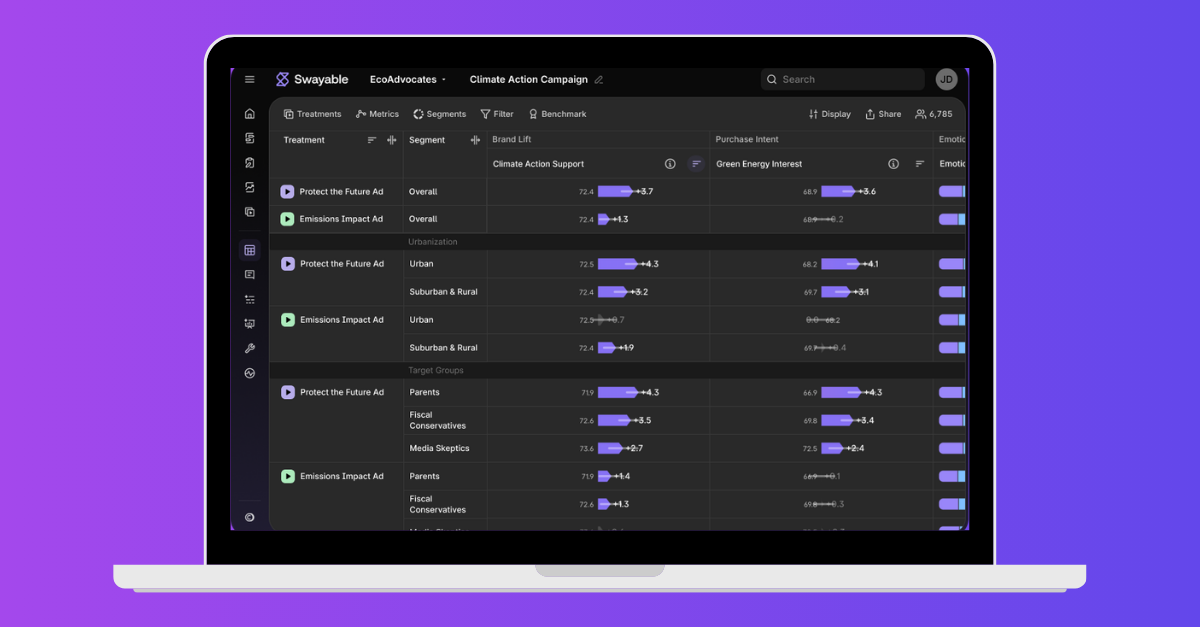
Swayable works with some of the largest brands in the world, and also with advocacy organizations and political campaigns. Their budgets and missions are very different. But when a new piece of creative lands on our platform, everyone is asking the same question: Will this change minds and capture attention with our target audience?
Working across both worlds gives me an unusual vantage point. Advocates have something brands spend fortunes trying to manufacture: a mission people actually care about. Brands, meanwhile, have spent the last decade learning some hard lessons about persuasion and attention. I think some of those lessons are worth sharing.
Politics and advocacy have a proud history of pushing communications forward. The analytics and experimentation teams behind campaigns like Obama’s in 2008 were studied by corporate marketers, not the other way around. Organizers pioneered relational outreach and peer-to-peer messaging long before brands caught on. All of this happened with smaller budgets and an election cycle that resets every 2 years, constraints most brand marketers never face.
Whether you’re selling sneakers or advocating for minimum wage, the math behind persuasion is the same. The average American spends roughly seven or more hours a day online, and encounters thousands of ads and pieces of branded content in that time. Each post becomes one more item in that stream. If it’s lucky, it gets a few seconds to make its case.
Brands learned this the hard way. Now brands test the underlying messages first, then the executions, then iterate before finalizing. The most strategic national brands spend 10% of their ad budgets on testing. They aren’t doing it because they love research. They’re doing it because they can’t afford not to.
A message strategist in the progressive advocacy space recently made a point I hear often, and it’s a fair one: social media is inexpensive and comes with built-in analytics, so you can post, learn, and adjust. That instinct to learn from data is exactly right. Platform metrics are useful, and smart teams use them well.
But there are also costs to using only this approach.
- 1. The platform is measuring engagement, rather than persuasion. Likes and shares disproportionately come from people who already agree with you. A post can “win” on every platform metric while moving zero persuadable people, or even pushing some of them in the wrong direction. Platform dashboards are built to measure what the platform sells, which is engagement. They were never designed to tell you whether you changed people’s minds.
- 2. Every attempt spends real attention from real people. When you iterate in public, your audience is your test group, and each miss teaches them that your content is skippable. Your audience falls victim to attention fatigue.
- 3. The algorithm is taking notes too. Content that underperforms tells the platform your future content deserves less distribution. Your drafts become your reputation.
The organizations I see breaking through—brands, campaigns, and non-profits alike– share common approaches. They test not only the message but also iterate on tone and messenger. They dig deeply into who’s actually being moved. And, critically, they are aligning these with medium and platform. The tone, altitude, and messenger that work well on a TV spot simply do not land on TikTok.
None of this requires a Fortune 500 budget, and advocacy organizations are well-positioned to do it. Mission-driven organizations have passion, authenticity, and urgency. Pairing those strengths with a clear-eyed testing strategy is a powerful combination.
As we move toward a more uncertain world, there are some things that always stay true: people’s perceptions change, and the only way to truly understand them is to ask them.
Mission-driven organizations already have something most brands work incredibly hard to build: a reason for people to care. With stakes getting higher, understanding the audience through real-time evidence is vital.
We built Swayable to give mission-driven teams that evidence before it’s needed most.